Keeping a vehicle well-maintained should mean trouble-free driving between workshop visits. This is good in theory, but sometimes components fail or wear faster than expected because of driving style or application; there’s also a chance that a service could be missed. If there is a braking issue, chances are the car will let you know. Here are some signs to look out for.
Driving dynamics and symptoms will help drivers and mechanics to more easily identify braking system issues.
Low or spongey brake pedal
A spongey pedal or one that almost hits the floor when pressed could mean there’s insufficient brake fluid in the system, or air might be trapped in the brake lines – this can happen if the brake system wasn’t properly bled when the pads or brake fluid was replaced. The brake fluid itself could also be contaminated. Over time, brake fluid loses its effectiveness as moisture enters the brake system through microscopic holes in rubber hoses, imperfect seals or even when the cap is left off the fluid reservoir.
High pedal force
This is when excessive pedal pressure is needed to slow the vehicle and can have several causes. One possibility is glazed brake pads, which occur when brakes overheat and the friction material hardens creating a hard and smooth glass-like surface, meaning the pads don’t ‘bite’ on the rotors efficiently. Other causes may include badly worn brake pads, a faulty brake booster, or caliper hardware that needs lubrication.
Brake drag
Brake drag happens when the brakes fail to disengage properly, making the vehicle feel sluggish or unresponsive when accelerating. There can be several causes including the brakes being adjusted too tightly, or due to worn pedal return springs, distorted brake backing plates or a blocked master cylinder bypass port. Other possible causes could be a seized caliper or caliper pins.
Brake pull
If the car pulls to one side when braking, this could be brake pull, which is caused by the brakes not exerting the same amount of force on both sides of the vehicle. Contaminated pads and linings, mismatched brake components, faulty caliper/pad alignment, or a seized caliper or sticking caliper can all lead to brake pull.
Brake grab
Brake grab is when the brakes feel ‘touchy’ and grab with very little pressure applied, making it difficult to brake smoothly. This can happen when the brakes are contaminated with brake dust, grease or fluids. Other possible causes include misalignment of brake calipers, loose brake mounting blots or seized caliper pistons and slides. Clogged, kinked or pinched brake lines and hoses can also result in a build-up of pressure that can cause the brakes to apply undue force.
Brake noise
Squealing, screeching, groans or rattling noises all indicate that the brakes need attention. The cause can be worn or damaged pads, incorrect caliper alignment or too much lateral runout where the rotor’s friction surface moves side to side when it rotates.
Vibration
If the brake pedal or steering wheel vibrates or pulsates when the brakes are applied, it can be because of parallelism (also known as disc thickness variation). This happens if the rotors haven’t been installed correctly, perhaps because of uneven lug nut torque, damaged studs or debris between the hub and rotor, causing the rotor to deviate from perfectly flat rotation as it spins.
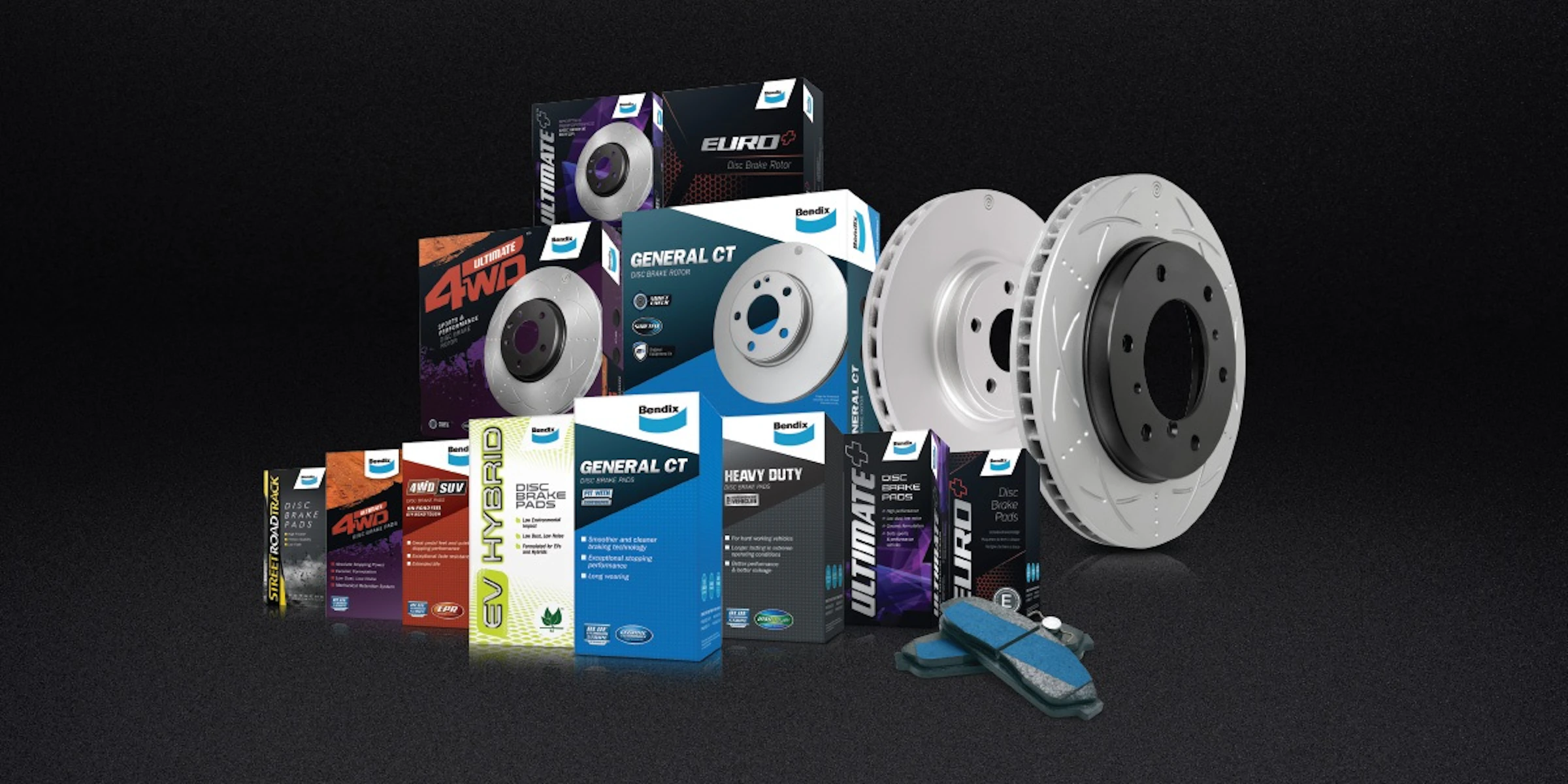
Bendix has a broad range of braking solutions available for passenger cars, 4x4s and light commercial vehicles operating in both 'every day' driving situations, as well as in extreme conditions and applications.
Bendix solutions
If drivers experience any of these problems, visit a workshop as soon as possible, because the symptoms are not only annoying, they affect braking performance and overall vehicle safety. A technician will identify if any replacement brake parts are needed or if cleaning and lubricating the braking system – including caliper slides and pins – will rectify the problem.
Through its General CT™ brake pads and rotors, owners of passenger cars used in everyday applications can enjoy smooth, confident and reliable braking. General CT™ rotors are also an ideal pairing with Bendix’s 4WD/SUV™ brake pads. And for European vehicles, Bendix’s Euro+™ pads and rotors are developed specifically as an OE replacement, while generating minimal brake dust which allows owners to keep their rims cleaner for longer.
For more demanding applications that go well beyond ‘normal’ conditions, the Bendix range includes Heavy Duty™ brake pads for drivers of light commercials and other vehicles used in high load work. Owners of 4x4s that carry and tow heavy loads and cover extreme conditions are also catered to with pads, rotors and upgrade kits from Bendix’s Ultimate 4WD™ range, while drivers of sports and performance vehicles looking for extra braking performance for spirited driving can choose Ultimate+™ pads and rotors.
The Bendix range provides a broad choice for vehicle owners, while giving mechanics and workshops the convenience and efficiency of partnering with a single brake manufacturer.